
Owning a pool in the Florida Keys is a genuine privilege -but the same marine environment that makes the Keys one of the most beautiful places to live in America is relentlessly hard on pool surfaces, tile, coping, and equipment. Salt air, intense UV, and the natural mineral content of South Florida groundwater accelerate pool degradation faster than virtually any other climate in the United States.
The result: many Florida Keys pool owners find themselves facing renovation decisions sooner than expected, often with limited understanding of what’s actually needed, what it costs, or how to prioritize work when budget is a constraint. This guide walks through the complete pool renovation Florida Keys process -what to fix first, what it costs, and how to get the most value out of every dollar spent.
Before diving into costs and options, it’s important to understand why pool renovation in the Florida Keys projects requires specific materials and approaches:
Step 1: Salt air corrosion: The Keys’ proximity to the ocean means elevated chloride concentrations in the air. Over time, these attacks metal fittings, pump motors, light fixtures, and even concrete coping. Renovation materials must be specified for coastal exposure.
Step 2: UV intensity: The Florida Keys sits at roughly 24.5° latitude -closer to the equator than Miami. UV index values regularly reach 11+ (extreme) during summer months, fading and degrading pool surfaces, deck coatings, and caulking significantly faster than in inland locations.
Step 3: Water chemistry complexity: Keys groundwater is high in calcium and magnesium. Without careful chemical management during and after resurfacing, new plaster surfaces can scale rapidly.
Step 4: Logistics and contractor access: The Keys’ geography means fewer pool renovation contractors serve the area, and materials must be transported down US-1. Both factors affect pricing and scheduling.
Important: Always confirm that your pool renovation contractor has direct experience with Florida Keys properties -not just general South Florida experience. Coastal-specific material knowledge is essential for long-lasting results.
A complete pool renovation isn’t always necessary -and in a budget-constrained project, prioritising correctly determines whether you spend $6,000 or $30,000. Start with a professional assessment of the following:
Look for: rough or sandpaper texture under bare feet, visible staining that doesn’t respond to acid washing, delamination (hollow spots where the plaster separates from the shell), cracks, and pitting. If the surface fails the “hand test” -dragging your hand across the floor feels like sandpaper -resurfacing is due regardless of cosmetic appearance.
Waterline tile in South Florida endures constant wet-dry cycling, chemical exposure, and UV. Look for: cracked or missing tiles, efflorescence (white mineral deposits behind tile causing it to pop off), and grout failure. Pool tile replacement Miami and Keys contractors handle waterline tile as a standalone service -it’s one of the most cost-effective renovations for visual impact.
Coping is the material that caps the pool shell at the deck level. In the Keys, common issues include: chipping or spalling concrete coping, cracked pavers, and failed bond beam (the structural concrete at the top of the pool wall). Safety is the primary concern here -sharp or unstable coping is a liability issue for homeowners and rental properties.
Pool decks in the Florida Keys suffer from UV fade, surface cracking, and the growth of algae/mould in humid conditions. A re-sealing or cool-deck resurfacing is often sufficient, but severely deteriorated decks may require removal and replacement.
Any major renovation is an ideal time to assess whether your pump, filter, heater, and sanitizer are due for replacement. Upgrading to a variable-speed pump and automation system during a renovation avoids the cost of a separate service visit later and may qualify for FPL rebates.
Pool resurfacing Miami cost data serves as a useful baseline, but Florida Keys pricing typically runs 15–25% higher due to contractor availability and material logistics. Here’s a breakdown of surface material options and realistic cost ranges:
| Surface Material | Lifespan in FL Keys | Cost (Per sq ft, installed) | Best For |
|---|---|---|---|
| Standard White Plaster | 5 – 8 years | $4 – $6 | Budget renovations |
| Colored Quartz Aggregate | 10 – 15 years | $6 – $10 | Balance of value & aesthetics |
| Pebble / Exposed Aggregate | 15 – 25 years | $9 – $14 | Durability + premium look |
| Glass Bead Finish | 12 – 18 years | $10 – $15 | Luxury, shimmer effect |
| Fiberglass Resurfacing | 15 – 20 years | $12 – $18 | Retrofit: low maintenance |
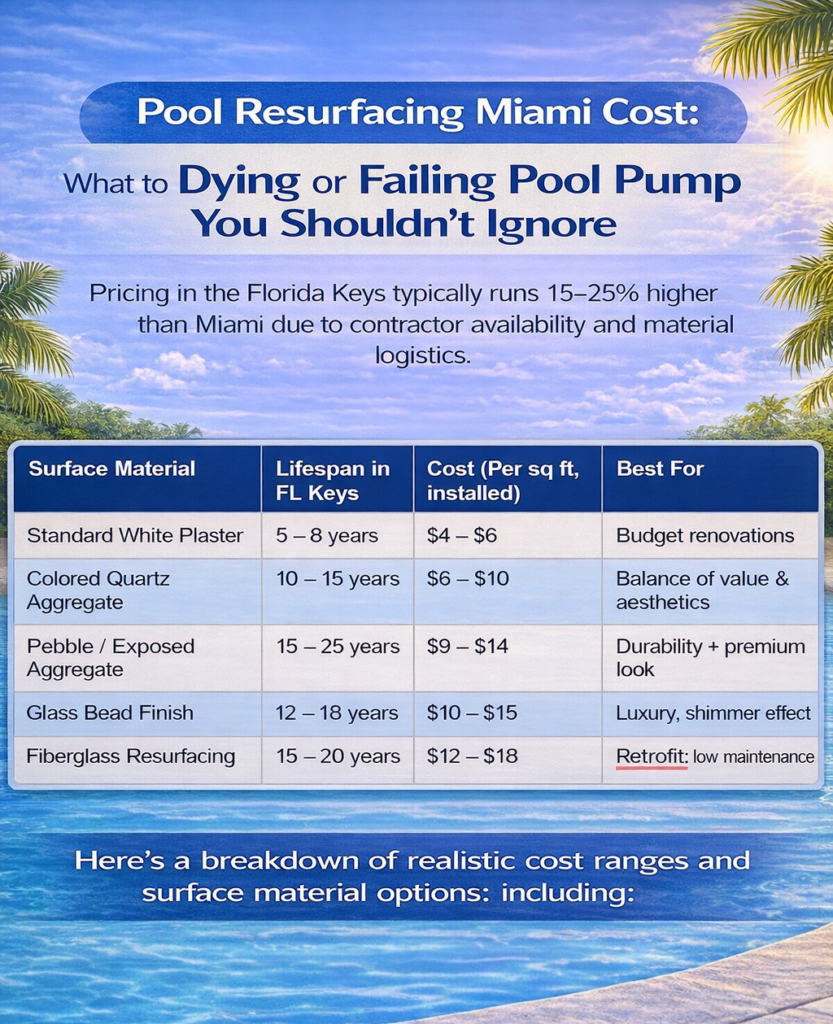
For Florida Keys properties, pebble and quartz aggregate finishes are strongly recommended over standard white plaster. The Keys’ aggressive water chemistry and UV environment consume plaster surfaces quickly -homeowners who choose the cheapest option often find themselves resurfacing again in 5–6 years, negating any initial savings.
Waterline tile replacement is often the highest-impact, lowest-cost renovation upgrade available. Pool tile replacement Miami pricing provides a guide, with Keys projects typically at the higher end:
For a standard 20,000-gallon pool with approximately 60 linear feet of waterline, ceramic tile replacement runs $720 – $1,080 in materials and $1,500 – $2,500 total installed. Glass mosaic tile for the same pool runs $1,320 – $2,400 in materials and $2,500 – $4,500 total installed.
Design Tip: Glass tile in deep blues and greens makes the water appear significantly more vibrant in South Florida’s sunlight. Many Florida Keys homeowners report that a tile upgrade alone transforms the visual impact of their pool more dramatically than any other single change.
Here’s an honest, current-market budget guide for pool remodel South Florida projects, applicable to both Miami and the Florida Keys (Keys projects at the higher end of each range):
| Renovation Scope | Estimated Cost Range | Typical Timeline | Best Suited For |
|---|---|---|---|
| Pool Resurfacing Only | $4,500 – $12,000 | 3 – 7 days | Worn plaster, staining |
| Tile Replacement (Waterline) | $1,500 – $5,000 | 1 – 3 days | Cracked, dated tile |
| Coping Replacement | $2,500 – $6,500 | 2 – 4 days | Safety, aesthetics |
| Deck Reseal / Resurface | $1,500 – $4,000 | 1 – 2 days | Faded, cracked decks |
| Equipment Upgrade Package | $2,500 – $6,000 | 1 day | Energy savings + code |
| Full Renovation (all above) | $12,000 – $35,000 | 2 – 4 weeks | Total transformation |
If you cannot do everything at once, here’s the recommended priority order for Florida Keys pool renovation:
Choosing the right pool renovation contractor in the Florida Keys requires extra attention due to the unique logistics and climate conditions. Always verify Monroe County licensing, not just general Florida credentials, and ask for references from Keys-specific projects. Get at least three detailed quotes with clear material specifications to ensure fair comparison. It’s also important to confirm their understanding of local water chemistry, especially during the first 28 days of plaster curing. Trusted experts like Reef Tropical Pools can help ensure quality work and long-term durability.
Renovation Timing: The best time to schedule a pool renovation Florida Keys project is October through January -the slower season for tourism means easier contractor scheduling, cooler temperatures for proper plaster curing, and faster project completion. Summer renovations are possible but require more aggressive chemical management during the curing period.
Pool renovation costs in the Florida Keys typically range from $4,500 to $35,000+, depending on the scope. Full renovations cost more due to logistics, material transport, and limited contractor availability in the Keys.
Pebble and quartz aggregate finishes are the best options for Florida Keys pools. They offer better durability against salt air, UV exposure, and mineral-heavy water compared to standard plaster, which tends to wear out faster.
Start with pool resurfacing, as it is structural and affects water quality. Next prioritize tile and coping, followed by equipment upgrades. Aesthetic upgrades like deck resurfacing can be done later.
Renovations cost more due to material transportation via US-1, fewer contractors, and coastal conditions that require specialized materials designed for salt air and high UV exposure.
The best time is October to January, when demand is lower, temperatures are cooler, and conditions are better for proper curing of pool surfaces.
